Specialist techniques take time to master
We develop robot motions with laboratory specialists, using their techniques to guide repeatable task execution.

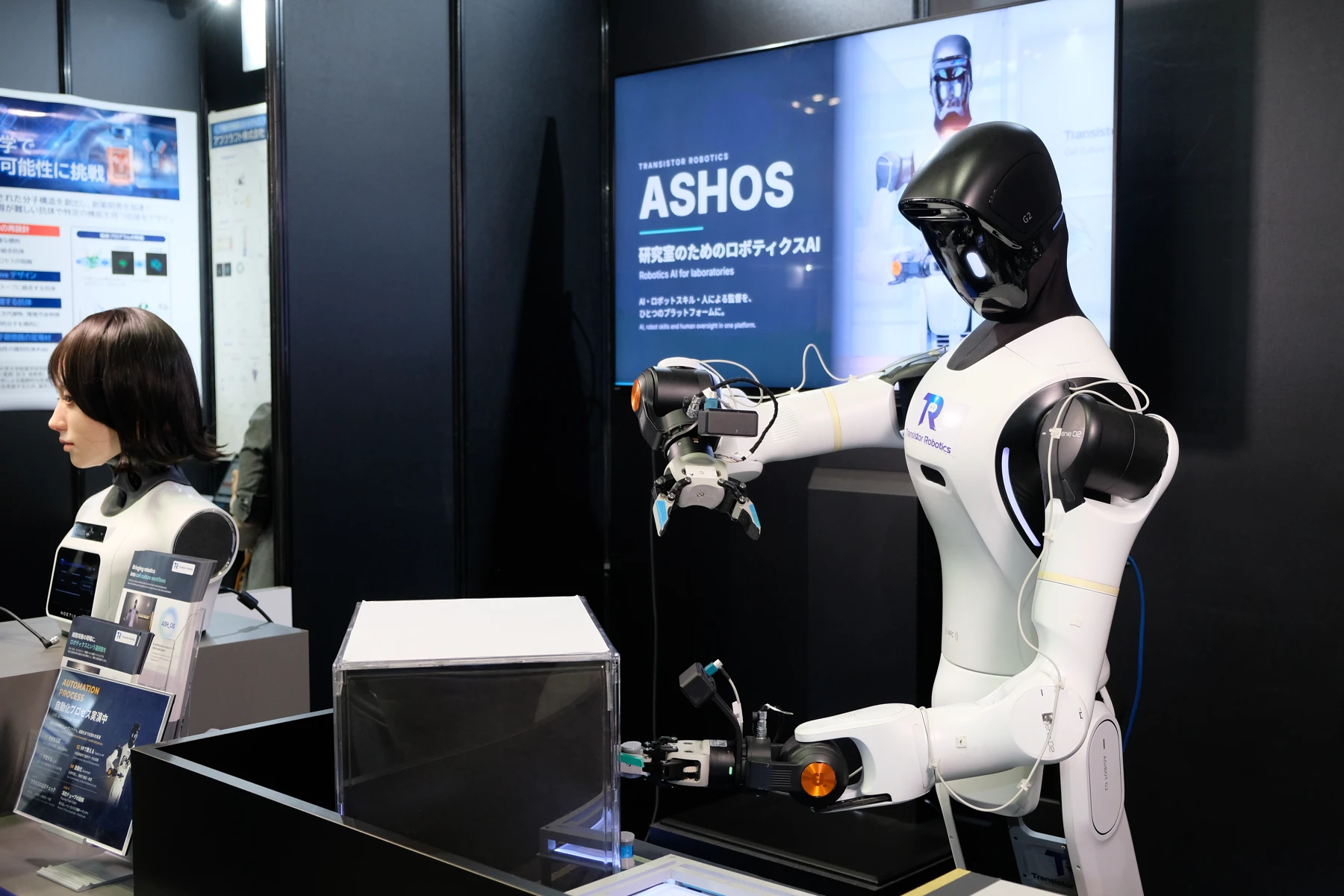
Support skilled people, take on repetitive work and connect laboratory operations. We develop robotic solutions around your culture methods, equipment and the knowledge you need to protect.
We develop robot motions with laboratory specialists, using their techniques to guide repeatable task execution.
We engineer vessel handling, tool adaptations and equipment interfaces to build toward connected laboratory tasks.
Our traceability development aims to connect robot activity with instrument information, helping teams review how an operation was carried out.
We prioritize local robot execution, with agreed data-use boundaries to help protect proprietary culture methods.
We’re working toward automation across the full cell culture workflow, building from individual robotic tasks to connected, multi-step laboratory operations.
Robotics opportunities across the culture workflow
Preparation leads to thawing and seeding, then culture and observation. Cell assessment informs continued culture, passaging when ready, or specialist review. Reseeding returns cells to culture. Cell recovery can also lead to banking, according to the culture plan. These are application opportunities, not a claim of end-to-end automation.
Prepare vessels and reagents
Continue culture, passage when ready, or seek specialist review
Recover and reseed
Liquid-tool and centrifuge handling opportunitiesPrepare cryovials, freeze and store
Evaluate before the next action
We develop AI and robotics for the practical demands of cell culture. Scientific understanding and hands-on laboratory knowledge guide the motions, tools and equipment interfaces we build, with ASH_OS supporting robot task execution.
Scientific and laboratory input guides robotics engineering. ASH_OS supports AI and robot control for task execution. Robot trials and laboratory evaluation feed refinements back into engineering.
Culture requirements, specialist techniques and operating conditions
Customer specialists, advisers and laboratory partnersTask motions, tools and equipment interfaces
Physical tasks in the laboratory
Robot trials and laboratory evaluation inform task and interface refinements
Our proprietary software connects AI and robot control for task execution. Coordination across robots and equipment is in development.
Explore ASH_OSLocal execution is a design priority. Together, we define on-site functions, operational and training data storage, and access and reuse arrangements.
Our traceability development aims to link robot activity, instrument information and process records, so teams can review an operation alongside its result.
Your vessels, instruments, workspace and clean-handling requirements guide what can be retained and where fixtures, interfaces or layout changes are needed.
Training, preparation, intervention and maintenance are considered alongside future task changes, with responsibilities defined as part of the project scope.
Start with a challenge, an idea or a question about what automation could make possible.
We look at relevant operations, equipment and working conditions with your team.
Together, we identify useful automation opportunities and define an initial scope and responsibilities.
Where agreed, we evaluate priority tasks within a defined scope and use the findings to plan the next stage.
Have a recurring challenge, an equipment idea or a question about automation? Tell us what you have in mind. Let's explore a useful next step.
Talk to Us